Amazon A+ Content for Food & Grocery Products
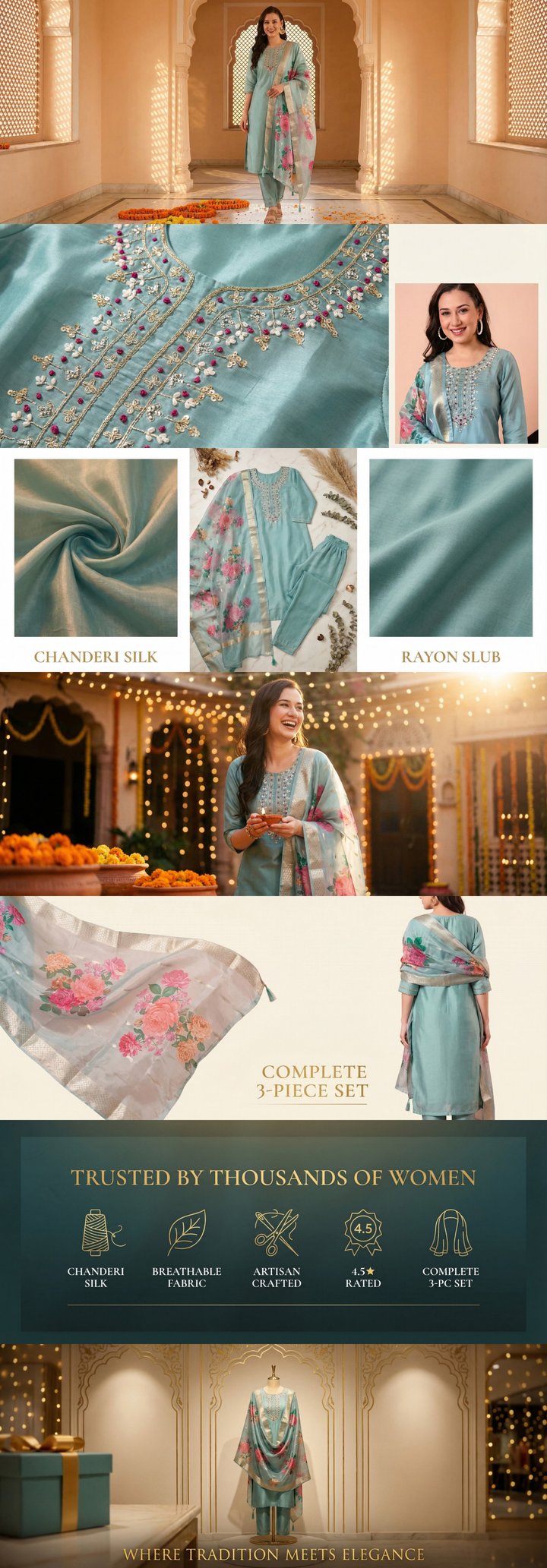 Built by zonfy in 90 seconds
↑ Real output. Try it free →
Table of contents
The Unique Challenge of Selling Food on Amazon
Selling food and grocery products on Amazon presents a challenge that no other category faces: customers cannot taste, smell, or touch your product before buying. In a brick-and-mortar store, free samples and eye-catching packaging do the heavy lifting. On Amazon, your A+ Content must compensate for every sensory experience that online shopping lacks.
The food and grocery category on Amazon has grown exponentially, with Amazon reporting over 35% year-over-year growth in grocery sales. As more consumers shift their grocery shopping online, the competition for attention has intensified. A+ Content is no longer optional for food brands — it is essential for communicating quality, ingredients, usage occasions, and brand story in a way that overcomes the limitations of screen-based shopping.
Food listings with A+ Content see conversion improvements of 10-18% on Amazon, which is among the highest category lifts. This is because food buyers have high uncertainty — they cannot evaluate the product physically — and A+ Content directly reduces that uncertainty.
What Food and Grocery Buyers Care About
Before designing your A+ Content, understand the hierarchy of concerns for food buyers on Amazon:
- Ingredients and quality — "What is actually in this? Where does it come from?"
- Dietary compatibility — "Is this gluten-free/vegan/keto/organic?"
- Taste and texture expectations — "What will this taste and feel like?"
- Usage and preparation — "How do I use this? What recipes work?"
- Value and quantity — "How much do I get? How many servings?"
- Brand trustworthiness — "Is this a reputable brand? What are their standards?"
Your A+ Content should address all six concerns across your 7 modules.
Try zonfy free
Generate Amazon A+ Content in 90 seconds
7 professional A+ images (1464×600 desktop + 600×450 mobile) sized exactly for Seller Central. Built from your product photos in 90 seconds.
Generate A+ Content →Your first generation is free. No credit card required.
The 7-Module Strategy for Food Products
Module 1: Hero Banner — The Appetite Appeal
Your opening module must do what a grocery store shelf does: make the product look irresistible. Food photography is an art, and your hero banner should feature professional food photography that makes the viewer hungry.
What works:
- The product in a styled food scene (artisanal bread on a rustic cutting board, premium olive oil drizzled over fresh salad)
- Warm, appetizing color palettes (golden tones, natural greens, rich browns)
- Minimal text — let the food speak for itself
- The actual product packaging visible alongside the prepared food
What does not work:
- Product packaging alone on a white background (save that for main images)
- Overly processed-looking food photography
- Heavy text overlays that hide the food imagery
- Generic stock food photography (customers can sense inauthenticity)
Module 2: Ingredient Sourcing and Quality Story
Modern food consumers care deeply about where their food comes from. This module builds trust by showing transparency.
Effective elements:
- Map or visual showing where key ingredients are sourced ("Single-origin coffee beans from Colombian highlands")
- Farming or production process imagery (orchards, farms, production facilities)
- Quality certifications displayed prominently (USDA Organic, Non-GMO Project Verified, Fair Trade)
- Ingredient quality statements ("Made with 100% grass-fed butter," "Cold-pressed from first harvest olives")
Important: Only display certifications you actually hold. Misrepresenting organic status, Non-GMO verification, or other certifications is not just an A+ Content compliance issue — it is a legal issue with FDA and FTC implications.
Module 3: Nutritional Information Visual
While your product listing must include a Nutrition Facts panel in the main images, A+ Content gives you an opportunity to present nutritional highlights in a more engaging format.
Approach options:
Option A: Macro-nutrient highlights
- Focus on 4-6 key nutritional talking points
- "25g Protein Per Serving" / "Only 3g Net Carbs" / "100% Daily Vitamin D"
- Use large, clear numbers with brief benefit explanations
- Design as an infographic rather than a standard nutrition table
Option B: Dietary compatibility grid
- Visual checkmarks showing compatibility with popular dietary approaches
- Keto, Paleo, Whole30, Vegan, Gluten-Free, Dairy-Free, etc.
- Simple, scannable format that lets dietary-conscious buyers quickly verify fit
Compliance critical: Your nutritional claims in A+ Content must match your actual Nutrition Facts panel. Overstating or misrepresenting nutritional content violates both Amazon policies and FDA regulations. See our A+ Content compliance guide for full details.
Module 4: Recipe Ideas and Usage Suggestions
This module is uniquely powerful for food products. By showing how to use your product, you accomplish two things: you help customers visualize the product in their life, and you demonstrate versatility that increases perceived value.
How to structure recipe/usage modules:
- Feature 3-4 recipe or serving suggestions with appetizing photography
- Keep recipes simple enough to be aspirational but achievable (3-5 steps)
- Show the finished dish prominently
- Include occasion-based suggestions ("Perfect for weeknight dinners," "Holiday entertaining," "Post-workout recovery")
For ingredient products (spices, oils, flours, sauces):
- Show the product being used in different cuisines or dishes
- Demonstrate versatility ("Use in marinades, dressings, stir-fries, or as a finishing oil")
For ready-to-eat products (snacks, prepared meals):
- Show serving suggestions and pairings
- Demonstrate occasion-based usage ("office lunch," "road trip snack," "after-school treat")
Module 5: Comparison Chart — Your Product Line
Use the comparison chart to showcase your full product line and help customers find the right variant:
For products with multiple flavors:
- Compare all available flavors side by side
- Include flavor profile descriptions ("Bold and smoky" / "Sweet and tangy" / "Mild and herbaceous")
- Note spice levels, sweetness levels, or intensity
- Include common pairing suggestions for each flavor
For products with multiple sizes:
- Compare serving counts and per-serving costs
- Highlight value propositions for larger sizes
- Show which size suits different needs (individual use, family, bulk/commercial)
For products in different formulations:
- Regular vs. organic vs. sugar-free, for example
- Compare key nutritional differences
- Note dietary compatibility differences
Module 6: Quality Assurance and Certifications
Food safety and quality are paramount concerns for online grocery buyers. This module addresses trust:
Essential trust elements for food:
- Manufacturing facility certifications (GMP, SQF, BRC)
- Third-party testing results or badges
- USDA Organic certification (if applicable)
- Non-GMO Project Verified (if applicable)
- Kosher/Halal certification (if applicable)
- Allergen-free certifications (Gluten-Free Certification Organization, etc.)
- Country of origin and manufacturing location
- Sustainability commitments (recyclable packaging, carbon-neutral operations, etc.)
Design tip: Present certifications as a clean badge grid with recognizable logos. Include brief explanations for less common certifications that your target audience might not recognize.
Module 7: Brand Story and Bundle Cross-Sell
Your closing module connects the product to your brand narrative and encourages multi-product purchasing:
Brand story elements that work for food:
- Family recipe or founder story (food brands with personal stories perform well)
- Sourcing philosophy and supplier relationships
- Community or environmental impact
- Heritage and tradition (for specialty or ethnic food products)
Cross-sell approach:
- "Build Your Pantry" or "Complete Your Kitchen" framing
- Show complementary products that work together
- Suggest variety packs or subscription options
- Gift-giving suggestions for specialty food items
FDA Compliance in A+ Content
Food products on Amazon are subject to FDA regulations in addition to Amazon's general A+ Content guidelines. This creates a dual compliance requirement:
Health Claims
The FDA categorizes health claims into three types, each with different requirements:
Authorized health claims (FDA-approved relationship between a nutrient and disease):
- Can be used if your product qualifies ("Calcium may reduce the risk of osteoporosis")
- Must use the exact language authorized by FDA
- Product must meet specific nutritional criteria
Qualified health claims (limited evidence of health relationship):
- Must include qualifying language ("Limited evidence suggests...")
- Less commonly used in A+ Content due to space constraints
Structure/function claims (describes how a nutrient affects body structure or function):
- "Calcium builds strong bones" — this is a structure/function claim
- Must be truthful and not misleading
- Must not imply disease treatment or prevention
- Requires the disclaimer: "This statement has not been evaluated by the FDA. This product is not intended to diagnose, treat, cure, or prevent any disease."
Amazon's additional restriction: Even when FDA-compliant health claims are permitted, Amazon frequently rejects A+ Content that includes health claims because their automated review systems flag them. The safest approach is to focus on ingredient quality and nutritional facts rather than health benefit claims.
Allergen Information
- Allergen warnings in A+ Content must be accurate and consistent with your product label
- The Big 9 allergens must be disclosed if present: milk, eggs, fish, shellfish, tree nuts, peanuts, wheat, soybeans, sesame
- "May contain" cross-contamination warnings should be included where applicable
- Never claim "allergen-free" unless your manufacturing process genuinely prevents cross-contamination
Organic Claims
- Only products with USDA Organic certification can use the word "organic" in A+ Content
- "Made with organic ingredients" has specific requirements (70-95% organic ingredients)
- Using the USDA Organic seal without certification is a federal violation
- "Natural" is not regulated the same way as "organic" but should still be used accurately
Photography Best Practices for Food
Food Styling and Photography
- Use professional food photography — food is one of the hardest things to photograph well. Invest in quality here.
- Natural lighting works best for food — soft, directional light that creates warmth
- Props and surfaces should complement the food: wooden boards, linen napkins, ceramic plates, fresh herbs
- Show the texture — close-ups of crunch, creaminess, melt, drizzle, sprinkle
- Include context clues — a hand reaching for a chip, steam rising from soup, a spoon pulling through honey
Packaging Photography
- Show the full packaging clearly, with all labels visible
- Include size reference (package next to a common object or hand)
- Show the package opened to reveal the contents
- For multi-pack products, show both the case and individual units
Photography Pitfalls for Food
- Over-saturated colors that make food look artificial
- Product photos that do not match what the customer actually receives (this drives returns and negative reviews)
- Using the same hero food photo from your website without adapting it for Amazon's dimensions and mobile viewing
- Photographing food on backgrounds that clash with the product's color palette
Seasonal A+ Content Strategy for Food
Food products benefit from seasonal A+ Content updates more than any other category:
Holiday seasons:
- Update recipe modules with holiday-appropriate dishes
- Add gift-giving messaging for specialty food items
- Adjust photography to include seasonal elements
Summer vs. winter:
- Summer: cold dishes, refreshing flavors, outdoor dining scenes
- Winter: warm dishes, comfort food, indoor gathering scenes
Back-to-school and sports seasons:
- Snack products: lunchbox packing ideas, game-day recipes
- Health foods: meal prep suggestions, post-workout nutrition
Amazon's A+ Content review takes 7 business days, so plan seasonal updates at least 3 weeks before you need them live.
Measuring Food A+ Content Performance
Key metrics to track:
- Conversion rate — Expect 10-18% improvement for well-designed food A+ Content
- Subscribe & Save enrollment — A+ Content can drive subscription sign-ups by showing product versatility and routine usage
- Bundle and cross-sell rates — Track if the cross-sell module drives purchases of complementary products
- Return rate — Should decrease as product expectations align with reality
- Customer review sentiment — Look for mentions of "just as described" or "exactly what I expected"
For general A+ Content strategies across all categories, see our complete A+ Content guide. For help generating A+ Content images quickly, zonfy creates complete 7-image sets that you can tailor with the food-specific strategies above.