Amazon Listing Optimization for Beauty and Skincare Products (2026 Guide)
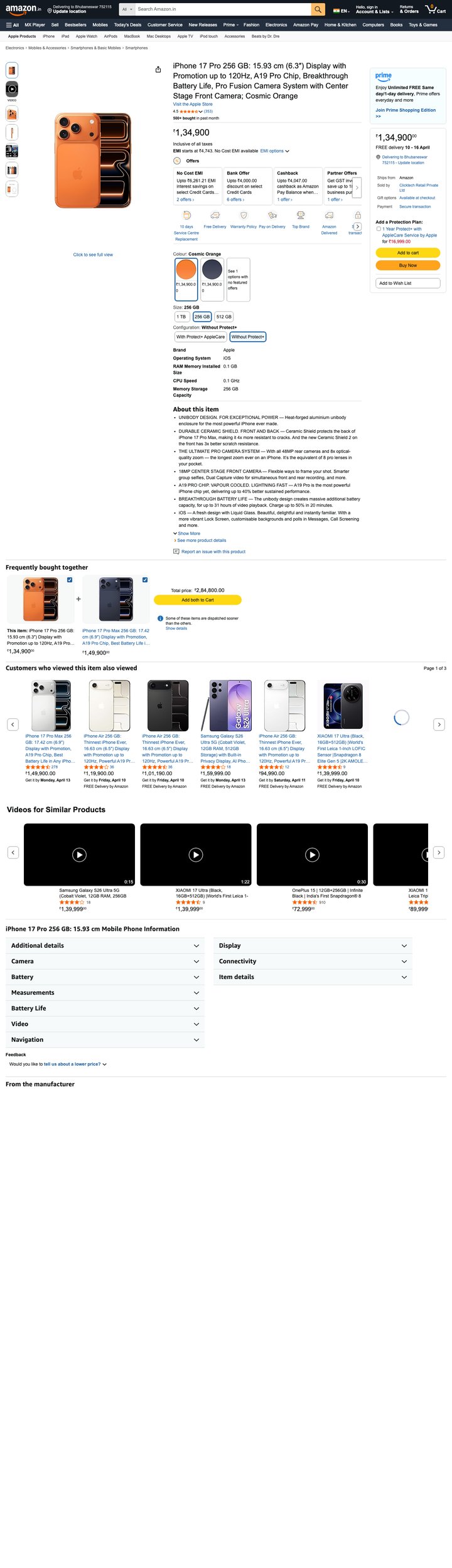 Built by zonfy in 90 seconds
↑ Real output. Try it free →
Table of contents
The Beauty Category on Amazon: Opportunity and Risk
Beauty and personal care is Amazon's fastest-growing category by percentage, with an estimated $28 billion in US marketplace sales in 2025. The category grew 18% year-over-year, outpacing electronics (9%) and home goods (12%). For sellers, this represents enormous opportunity — but also enormous risk.
The risk comes from Amazon's strict content policies for beauty products. More beauty listings get suppressed, flagged, or removed for policy violations than in almost any other category. The most common reason: prohibited health claims. Sellers write "anti-aging serum" in their title, "cures acne" in their bullets, or "clinically proven to reduce wrinkles" in their A+ Content, and Amazon's automated compliance systems take the listing down.
Understanding what you can and cannot say is not optional in beauty — it is the foundation of your listing strategy.
The Beauty Title Formula
Amazon allows up to 200 characters for beauty product titles. The formula that performs best in this category:
Brand + Product Type + Key Ingredient + Primary Benefit + Size/Count
Examples:
- "CeraVe Moisturizing Cream — Ceramides and Hyaluronic Acid, Daily Face and Body Moisturizer for Dry Skin, 19 oz"
- "TruSkin Vitamin C Serum — Brightening Face Serum with Hyaluronic Acid and Vitamin E, 1 fl oz"
- "Neutrogena Hydro Boost Water Gel — Hyaluronic Acid, Lightweight Hydrating Face Moisturizer, Oil-Free, 1.7 oz"
Key Principles for Beauty Titles
Lead with the brand. Beauty is one of the most brand-driven categories on Amazon. Established brands see 2-3x higher click-through rates from brand name recognition alone. Even new brands benefit from consistent brand naming across their product line.
Name the hero ingredient. Beauty buyers increasingly search by ingredient: "vitamin C serum," "retinol cream," "niacinamide moisturizer." Your hero ingredient belongs in the title, not buried in the bullets.
Use safe benefit language. "Brightening" is safe. "Skin whitening" is not. "Hydrating" is safe. "Anti-aging" is flagged by Amazon's systems. More on restricted versus safe claims below.
Always include size. Beauty products come in multiple sizes, and buyers need to know what they are getting. Use "fl oz" for liquids, "oz" for creams, and count for items like masks or wipes.
Common Beauty Title Mistakes
Using restricted terms. "Anti-aging," "anti-wrinkle," "acne treatment," and "skin lightening" are flagged by Amazon's automated systems and may trigger listing suppression.
Overloading with ingredients. "With Vitamin C, Hyaluronic Acid, Retinol, Niacinamide, Peptides, Collagen, Aloe Vera, and Green Tea Extract" in the title is overwhelming and wastes characters. Pick your top 1-2 hero ingredients.
Missing the target skin type. Adding "for Dry Skin," "for Oily Skin," or "for All Skin Types" helps both search relevance and buyer qualification.
Restricted Claims vs. Safe Descriptors
This is the most critical section for beauty sellers. Amazon, in partnership with the FDA, restricts claims that position cosmetic products as drugs. The line is simple in theory: cosmetics alter appearance, drugs alter the structure or function of the body.
Claims That Will Get Your Listing Flagged or Suppressed
- "Anti-aging" (implies structural change to skin)
- "Reduces wrinkles" or "eliminates fine lines" (drug claim)
- "Treats acne" or "clears breakouts" (drug claim — acne is a medical condition)
- "Skin lightening" or "skin whitening" (drug claim)
- "Heals eczema" or "treats rosacea" (drug claim)
- "Clinically proven" (requires clinical trial documentation on file)
- "Dermatologist recommended" (requires documented survey data)
- "FDA approved" (cosmetics are not FDA approved — this is always false)
Safe Descriptors You Can Use Freely
- "Hydrating" and "moisturizing" (cosmetic function)
- "Brightening" (appearance-based, not structural)
- "Nourishing" and "replenishing" (cosmetic function)
- "Smoothing" (cosmetic appearance)
- "Firming" (appearance-based)
- "Soothing" and "calming" (cosmetic comfort)
- "Refreshing" and "revitalizing" (cosmetic experience)
- "Lightweight," "non-greasy," "fast-absorbing" (texture descriptors)
- "For the appearance of fine lines" (qualified appearance claim)
Navigating the Gray Area
Some claims fall into a gray area that requires careful wording:
Instead of: "Reduces wrinkles" → Use: "Helps minimize the appearance of fine lines"
Instead of: "Treats dark spots" → Use: "Helps brighten the look of uneven skin tone"
Instead of: "Anti-aging formula" → Use: "Age-defying skincare routine" (appearance-based)
Instead of: "Dermatologist recommended" → Use: "Dermatologist tested" (if you have testing documentation)
Instead of: "Clinically proven" → Use: "Formulated with clinically studied ingredients"
The key word is "appearance." You can make claims about how skin looks. You cannot make claims about how skin's structure or function changes.
Documentation You Need Before Listing
"Dermatologist Tested" Claims
If you state "dermatologist tested" in your listing, Amazon or a competitor challenge may require you to produce documentation. You need a signed statement from a board-certified dermatologist who has reviewed and tested the product, including the methodology and results.
"Hypoallergenic" Claims
While "hypoallergenic" is not an FDA-regulated term, Amazon may require patch test documentation if challenged. Having a third-party patch test study on file is recommended.
"Cruelty-Free" and "Vegan" Claims
These claims require documentation. "Cruelty-free" should be backed by Leaping Bunny or PETA certification. "Vegan" should be backed by ingredient documentation showing no animal-derived ingredients.
Organic and Natural Claims
"USDA Organic" requires USDA certification. "Made with organic ingredients" requires at least 70% certified organic ingredients. "Natural" is less regulated but should be defensible — a product with synthetic fragrances and preservatives should not claim "all natural."
Try zonfy free
Generate Amazon listings in 90 seconds
Title, 5 bullets, description, backend keywords, and 7 gallery images — generated in 90 seconds. Drop straight into Seller Central.
Generate Full Listing →Your first generation is free. No credit card required.
Ingredient Transparency in Beauty Listings
Ingredient transparency has gone from a nice-to-have to a conversion driver. A 2025 consumer survey found that 73% of beauty buyers read the ingredient list before purchasing, and 61% will abandon a purchase if they cannot find the full ingredient list on the listing.
How to Present Ingredients
In Bullet Points: Highlight your 2-3 hero ingredients with brief explanations of what each does. Example: "Formulated with 20% Vitamin C (L-Ascorbic Acid) — a potent brightening ingredient that helps even the look of skin tone."
In A+ Content: Dedicate a full module to your ingredient story. Use the Standard Four Image and Text module to spotlight 4 key ingredients, each with an icon or image and a brief description.
Full Ingredient List: Include the complete INCI (International Nomenclature of Cosmetic Ingredients) list in your product description or A+ Content. Buyers who want to check for allergens or specific ingredients expect to find this.
Ingredient Order Matters
INCI requires ingredients to be listed in descending order of concentration. Buyers who understand this will check whether your hero ingredient is near the top of the list or buried at the bottom. If your product is a "Vitamin C Serum" but Vitamin C is the 15th ingredient, knowledgeable buyers will notice.
Beauty-Specific A+ Content Strategy
Beauty A+ Content should feel aspirational while remaining informative. The best beauty A+ strikes a balance between the emotional appeal of the product experience and the rational appeal of ingredients, testing, and results.
Module 1: Hero Banner — Aspirational Brand Image
Your opening image should evoke the brand's aesthetic. Clean, premium photography that communicates the sensory experience of the product. Think dewdrops on skin, the texture of the cream, the color of the serum.
This module is about emotion, not information. You are setting the tone.
Module 2: The Problem-Solution Framework
Address the skin concern your product targets without making drug claims. Example: "Uneven skin tone can make skin look dull and tired. Our Brightening Serum is formulated with Vitamin C to help restore a healthy-looking, radiant glow."
Notice: "healthy-looking" not "healthy." "Radiant glow" not "cured discoloration."
Module 3: Hero Ingredients Deep Dive
Use a 3-4 image grid to spotlight your key ingredients. Each ingredient gets a beautiful icon or photo (the actual ingredient like turmeric root, vitamin C oranges, hyaluronic acid molecular illustration) paired with a safe benefit claim.
Module 4: How to Use
Beauty products benefit enormously from usage instructions in A+ Content. Show the application process in 3-4 steps:
- Cleanse and pat dry
- Apply 3-4 drops to fingertips
- Gently press into skin, focusing on target areas
- Follow with moisturizer and SPF
This module reduces returns caused by misuse and helps buyers envision the product in their routine.
Module 5: Before and After (Carefully)
Amazon allows before-and-after imagery for beauty products, but with strict rules:
- Images must be realistic (no Photoshop manipulation)
- Must include a disclaimer: "Individual results may vary"
- Cannot show dramatic transformations that imply drug-like effects
- Before and after images must be taken under the same lighting conditions
- Time period must be stated ("Results shown after 8 weeks of daily use")
When done correctly, before-and-after modules are the highest-converting A+ element in beauty. When done incorrectly, they get your A+ Content rejected.
Module 6: Social Proof and Trust Signals
Display key trust elements: "Cruelty-Free Certified," "Dermatologist Tested," "Made in the USA," "GMP Certified Facility," customer review highlights (paraphrased, not quoted directly from Amazon reviews), and press mentions if applicable.
Module 7: Full Product Line
If you sell a complete skincare routine (cleanser, toner, serum, moisturizer), use the comparison chart module to show the full line. This cross-sell module can increase average order value by 15-25% in beauty.
Leveraging Amazon Vine for Beauty Launches
Amazon Vine is especially valuable for beauty products because the category is so review-dependent. Beauty products with fewer than 15 reviews convert at roughly 40% the rate of products with 50+ reviews.
Why Vine Matters More for Beauty
Beauty is a trust-dependent purchase. Buyers are applying these products to their skin — they want social proof that the product works and is safe. Vine reviewers provide detailed, trusted reviews that build this initial trust.
Vine Strategy for Beauty
- Enroll in Vine immediately upon listing launch
- Provide 15-30 units (the maximum cost is worth it for beauty)
- Ensure your product packaging and unboxing experience are polished — Vine reviewers photograph everything
- Include clear usage instructions in the box — Vine reviewers will mention if instructions were unclear
Vine Review Optimization
You cannot influence Vine reviewer content, but you can influence the experience:
- High-quality packaging suggests a high-quality product
- Clear instructions prevent misuse complaints
- Including a results timeline card ("Use daily for 4-6 weeks for best results") sets realistic expectations
Beauty-Specific Keywords
Ingredient Keywords
- Vitamin C serum, retinol cream, hyaluronic acid moisturizer
- Niacinamide serum, salicylic acid cleanser, peptide cream
- Collagen cream, AHA/BHA toner, bakuchiol serum
Concern Keywords (Safe Phrasing)
- Brightening serum, hydrating moisturizer, pore minimizing
- Dark spot corrector, dullness, uneven skin tone
- Dry skin, oily skin, combination skin, sensitive skin
Format Keywords
- Face serum, face cream, eye cream, face wash
- Sheet mask, overnight mask, face oil, facial mist
- Travel size, full size, value size
Routine Keywords
- Skincare routine, morning routine, night routine
- Step 1 cleanser, step 2 toner, step 3 serum
Backend Search Terms
Prioritize in your backend fields:
- Ingredient misspellings (hyaluronic, hylauronic, hyluronic)
- Concern terms you could not fit in visible copy
- Competitor ingredient names that buyers search
- Korean skincare, K-beauty, J-beauty (if applicable to your product type)
- Gift-related terms (gift for her, birthday gift, skincare gift set)
Measuring Beauty Listing Performance
Beauty category benchmarks:
- Conversion Rate: 5-10% (higher for replenishment products like cleansers, lower for first-purchase products like serums)
- Subscribe and Save Adoption: 15-25% of orders (beauty products are perfect for subscription)
- Return Rate: Under 5% (beauty returns are lower than most categories)
- Review Rate: 2-4% of purchases leave reviews (incentivize through Vine and follow-up)
If your beauty listing converts below 5%, the most common culprits are: too few reviews, unclear ingredient information, restricted claims triggering suppression of listing elements, or poor A+ Content that does not address the buyer's skin concern.
A tool like zonfy.app can generate beauty listings that use compliant language by default, helping you avoid the claim pitfalls that suppress so many beauty listings while still creating compelling, conversion-focused content.
Final Checklist for Beauty Listings
- [ ] Title follows Brand + Product + Ingredient + Benefit + Size formula
- [ ] All claims use safe descriptors (no drug claims)
- [ ] Documentation on file for "dermatologist tested," "cruelty-free," or similar claims
- [ ] Full ingredient list (INCI) is included in listing
- [ ] Bullet points highlight hero ingredients with safe benefit language
- [ ] A+ Content includes ingredient module, how-to-use, and trust signals
- [ ] Before/after images (if used) include disclaimers and realistic imagery
- [ ] Vine enrollment is active for new launches
- [ ] Backend search terms include ingredient misspellings and concern terms
- [ ] Subscribe and Save is enabled